Avoiding SSL Certificate Problems Before They Break Your Site
SSL certificate problems are easy to miss and painful when they happen. A single expired or misconfigured certificate can cause browser warnings, failed connections, and loss of trust.
The problem isn’t that certificates are hard — it’s that they’re easy to forget.
Why SSL Certificates Fail in Practice
Most certificate issues happen for simple reasons:
- Certificates expire quietly
- Low-traffic or old domains are forgotten
- Certificates are replaced but not fully updated
- Hostnames don’t match the certificate
These issues usually show up after users are affected.
What Should Be Monitored
To avoid surprises, certificate monitoring should check:
- When a certificate expires
- Whether it has been revoked
- Whether the hostname matches the certificate
Expiration alone is not enough.
A Simple Way to Stay Ahead of Problems
Instead of tracking dates manually, certificates can be checked automatically.
A monitoring tool can connect to a domain, read the active SSL certificate, detect expiration or common errors, and alert you before users notice anything.
This works especially well for domains you don’t look at every day.
The Tool I Use: CertAvert
I built CertAvert to keep certificate checks simple and automatic.
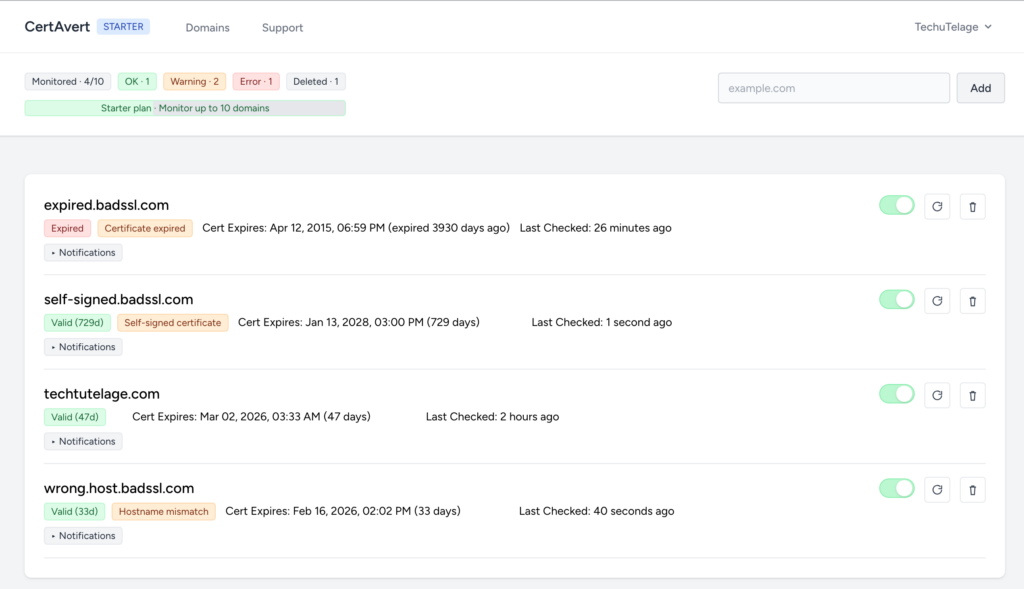
CertAvert monitors SSL/TLS certificates, alerts before certificates expire, detects issues like revoked certificates and hostname mismatches, and shows domain status in a clear dashboard.
The free plan includes monitoring for up to 3 domains.
When This Is Useful
This approach is useful if you:
- Manage several domains
- Have older or low-traffic sites
- Want alerts instead of manual checks
- Prefer simple tools over complex monitoring systems

Final Thoughts
SSL certificate failures are preventable if they’re monitored consistently. Automated checks remove guesswork and reduce the chance of unexpected outages.
If you want a simple way to monitor certificates, you can find CertAvert at: https://certavert.com